
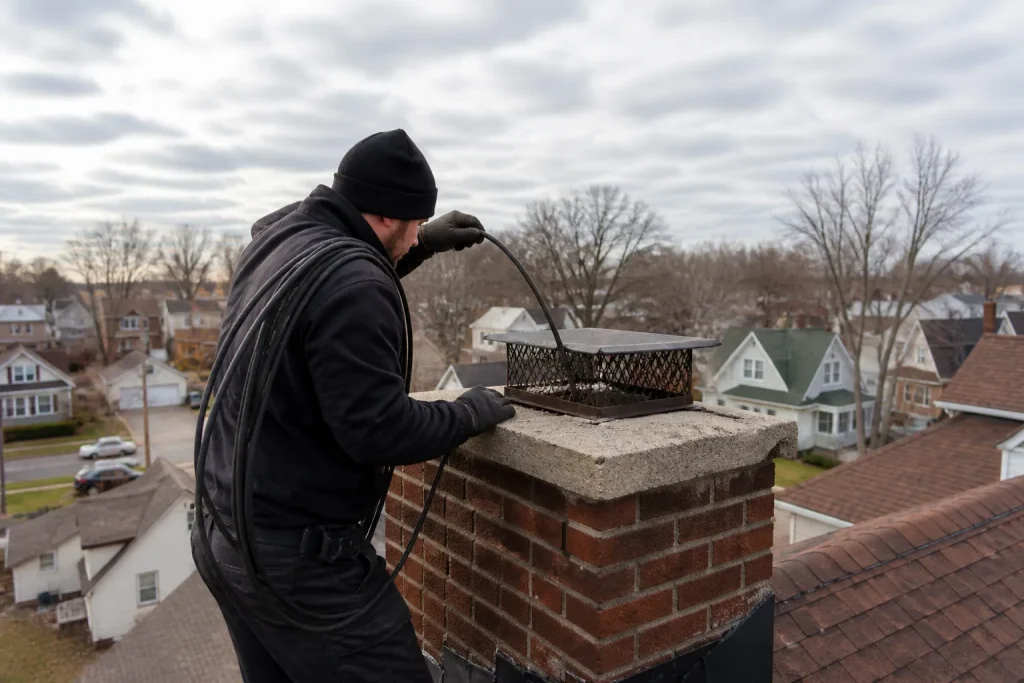
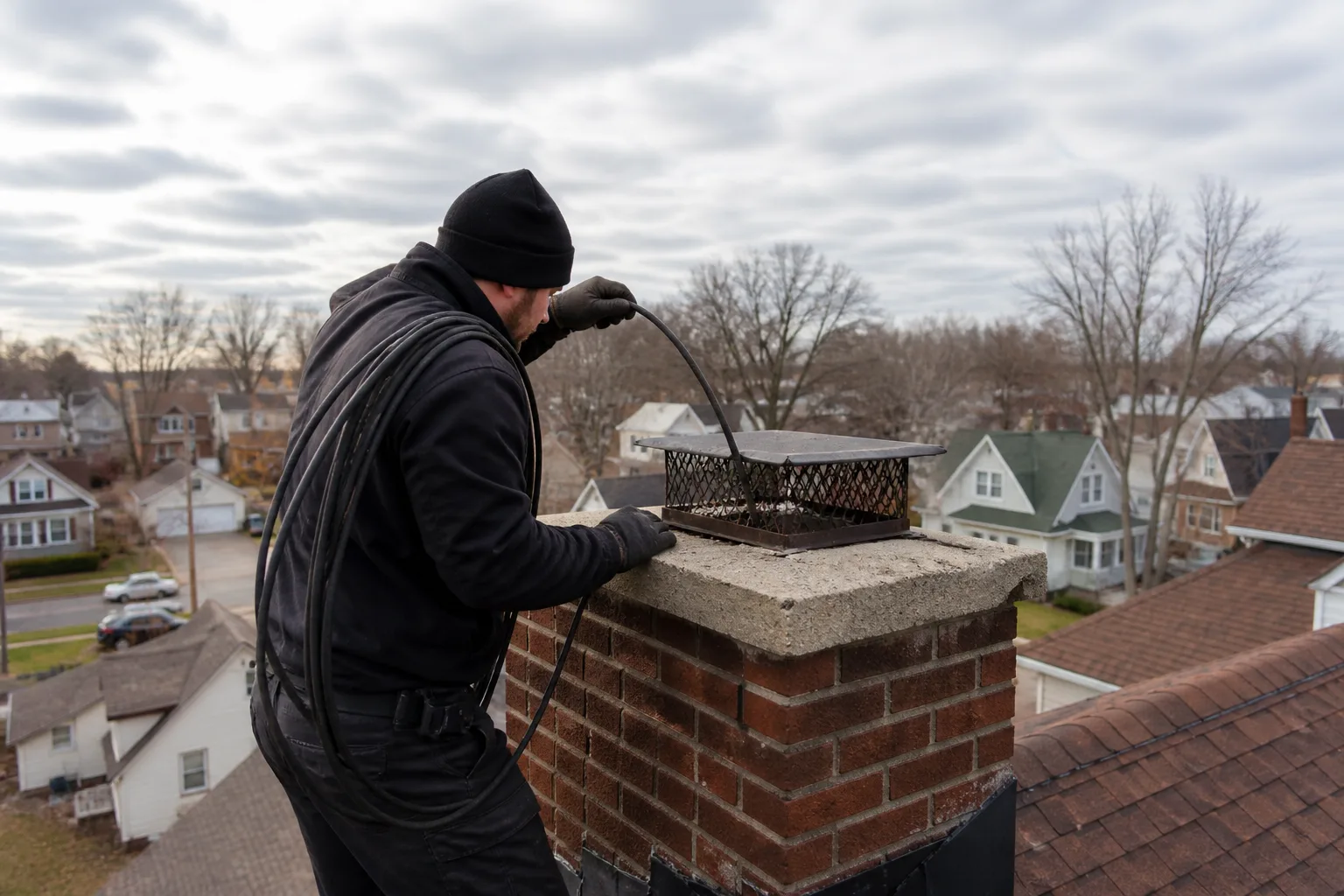
Emergency Chimney Sweep Near Me: What Elmhurst Homeowners Should Do First
If you think you have a chimney emergency in Elmhurst, the first three steps are the same: make sure everyone is safe, cut the air supply to the fire, and call the right number. Call 911 when there’s active fire coming out of the chimney top, when a carbon monoxide alarm sounds, or when you smell gas. Call a chimney specialist when the fire is out but something still feels wrong. The confusing part is figuring out which one you’re dealing with at 9pm with a smell in the living room. If you’d rather have a specialist look at it than guess, call (844) 871-3169.
What Counts as a Real Chimney Emergency in Elmhurst?
A true emergency means there’s a threat to people or the structure right now. Everything else is urgent, and urgency is different from danger. In our experience, the two get mixed up all the time, and homeowners either panic over a blocked flue or shrug off a cracked liner that’s already a problem. Here’s how we separate them.
Call 911 first if:
- Flames or sparks are visible from the chimney top.
- A carbon monoxide alarm is sounding, or anyone feels dizzy, nauseous, or short of breath.
- You smell gas, or hear a roaring sound like a freight train from the flue (that’s often a sign of a hot chimney fire flaring back up).
- The firebox, mantel, or surrounding wall is hot to the touch.
Call a chimney specialist instead if:
- Smoke is backing into the room but there’s no active flame at the top.
- You found soot or creosote flakes on the hearth after a fire burned strangely.
- There’s a strong smell of smoke days after the last fire.
- A bird, squirrel, or raccoon has moved into the flue.
- A flue tile has cracked or fallen, or you see debris in the firebox.
The reason the line matters: a flue fire that has burned out on its own has already done its damage. Cracked tiles, warped liners, and compromised mortar don’t announce themselves. Someone needs to look before you light another fire. In Elmhurst’s older housing stock, where many homes have mature masonry chimneys with decades of heat cycling behind them, a small fire can widen existing cracks fast.
What Should You Do While You Wait for Help?
Close the damper. That’s the single most useful thing you can do in the first two minutes. Some homeowners instinctively open the firebox to look around, which feeds oxygen to a smoldering flue and can make things worse. Don’t open it. Keep the firebox door or screen shut, close the damper if the fire is out, and get everyone out of the room.
Then work through this:
- Get people out of the house if there’s any smoke inside. Smoke contains carbon monoxide and fine particles. Kids, pets, elderly family members, and anyone with breathing trouble go first.
- Close the damper. This is the oxygen-cut step. No opening the firebox “just to check.”
- Move anything flammable away from the hearth and walls. Firewood, rugs, curtains, furniture.
- Don’t throw water on a chimney fire. It can crack hot tiles and send steam and pressure up a flue that’s already stressed. Leave it to trained responders.
- Note the time and the symptoms. When you call, “smoke smell started around 8:45, no alarm, no one feeling sick” tells the technician a lot more than “something’s wrong.”
In Elmhurst, where summers run humid and winters stay cold, sudden temperature swings between a hot flue and cold masonry are part of why tiles crack. A flue that heats and cools hard season after season needs to be inspected after any suspected fire, not just visually checked from the hearth.
What Information Should You Have Ready When You Call?
The most useful call is one where we get four answers in the first thirty seconds. That way our technicians know which tools and materials to bring, since a post-fire inspection needs different equipment than a routine cleaning. Have these ready:
- Flue type: masonry with tiles, or a metal liner? If you don’t know, describe the chimney from the outside and the firebox from the inside.
- Last service date: when the chimney was last swept or inspected. If it’s been more than a year of regular burning, say so.
- Fuel burned: seasoned hardwood, softwood, pellets, or a gas insert. Wood chimney fires behave differently than gas appliance issues.
- Symptoms: smoke backing into the room, a smell, a noise, an alarm, visible debris, or a stain on the wall.
Put these in a short note before you dial. It’s the same principle as calling a doctor: “sharp pain in the lower right side, started yesterday” moves things faster than “I feel bad.” We’re not going to quiz you, but the details determine what a technician brings. Call (844) 871-3169 and you’ll get a real conversation, not a script.
Why Same-Day Chimney Work Needs a Specialist, Not a Generalist
Post-fire inspection is not a cleaning job. It requires a camera, a set of chimney-specific hand tools, and materials built for chimney applications. A handyman who sweeps chimneys “on the side” typically arrives with a brush and a shop vac, which tells you nothing about the inside of a flue that just fired.
What actually happens on a real post-fire call:
- Video camera inspection from the top down and the firebox up, so we can see cracked tiles, offset joints, and gaps in the liner.
- Creosote staging assessment: glazed, stage-three creosote needs a chemical treatment before it can be brushed, which is not a task for a general sweep.
- Liner decision: if tiles are cracked or the liner is compromised, we spec a DuraFlex liner system, which is built for restoring safe draft and containment in a damaged flue.
- Resurfacing where the flue is pitted but not failed: HeatShield ceramic resurfacing fills and smooths a compromised interior. Very few sweep-only companies offer this, and it can save a liner install when the flue is still structurally sound.
- Cap and crown restoration: a damaged crown or missing cap is often what let water and animals in and started the trouble. Gelco and Olympia Chimney components are made for that exact fit.
That’s the difference between a specialist and a generalist. We work chimney-only, start to finish, so the inspection, the repair, the cap, and the follow-up sweep all run through the same trade.
When Should You Call a Pro and When Can It Wait?
If you’re reading this page because you searched “emergency chimney sweep near me Elmhurst NY,” you’re probably already a little worried. Here’s our honest read: a smell or a small smoke-back can often wait for a scheduled visit. A fire, an alarm, or a collapsed flue tile cannot.
Call today if any of these are true:
- You had a chimney fire, even one that seemed to burn out.
- Smoke is persistently backing into a room during fires.
- The carbon monoxide alarm has gone off, or anyone has felt unwell near the fireplace.
- A flue tile has visibly cracked or a piece has fallen into the firebox.
- Water is staining the ceiling or wall near the chimney chase.
You can schedule a regular visit if:
- You smell smoke between fires but everything else seems normal.
- A bird got in and got out, and you want the flue checked.
- The fireplace is drafting badly only on windy days.
- It’s been a year or more since the last sweep.
Our technicians have up to 9 years of experience, and one thing we tell every Elmhurst homeowner is this: we’d rather look at a chimney a week early than a week late. A quick chimney sweep and camera check catches most of what a “real” emergency starts as.
How to Prevent the Next Chimney Emergency in Elmhurst
Most chimney emergencies in Elmhurst start well before the fire. Creosote builds up over a season or two of regular burning, especially with unseasoned wood. A cap goes missing and rain and animals get in. A crown cracks and water finds the masonry. Then one cold night the flue lights up wrong.
What actually helps:
- Burn dry wood. Split and seasoned for at least a year. Wet wood deposits creosote faster.
- Get a yearly inspection. A camera inspection once a year catches tile cracks before they become a fire hazard.
- Keep a cap on it. A properly fitted chimney cap & crown keeps rain, birds, and squirrels out. That single component prevents more emergencies than any other.
- Sweep based on use, not on the calendar. A fireplace used heavily needs sweeping more often than one used twice a season.
- Watch the weather. Elmhurst’s freeze-thaw cycles stress masonry. If you see mortar crumbling or staining on the exterior, get it looked at before winter.
Chimney work is one trade, and it all interlocks: sweep, inspect, chimney repair, cap, firebox. A crack in one section undermines the others. Keeping it on one specialist means you’re not chasing three vendors to fix one problem. If you want to see our full service menu in one place, start at Elmhurst Chimney Sweep.
The Bottom Line
A chimney emergency comes down to three moves: make sure everyone’s safe, cut the air to the fire (close the damper, don’t open the firebox), and call the right number. Call 911 for active fire, CO alarms, or gas smell. Call a chimney specialist for everything else, especially after a fire that seemed to burn out. Knowing your flue type, last service date, and what you burned makes the first call five times more useful. After the fire, a camera inspection and a repair plan (DuraFlex liner, HeatShield resurfacing, Gelco or Olympia cap, or a straightforward sweep) will tell you what actually needs to happen. If you’re in Elmhurst and need help, Elmhurst Chimney Sweep offers free estimates – call (844) 871-3169. We answer 24/7. Fast dispatch from 7am to 7pm, Sunday through Friday.
Related services in Elmhurst: chimney sweep, chimney cap & crown, chimney repair. Our technicians have up to 9 years of experience, and we work with DuraFlex, HeatShield, Gelco, Olympia Chimney, Famco, and Copperfield components across all of it.
Frequently Asked Questions
Most post-fire inspections and standard sweeps land in the low-to-mid hundreds of dollars, but the exact price depends on flue length, creosote stage, and whether repairs are needed. We set the price per job in a written estimate before any work starts, so you know what you’re paying before we open the toolbox. Call (844) 871-3169 for a free estimate.
Yes. A flue fire that lasted under a few minutes can still crack tiles, warp a metal liner, and loosen mortar joints in ways you can’t see from the hearth. A camera inspection catches that before the next fire. If your liner is compromised, we can spec a DuraFlex or HeatShield fix rather than just sweeping and hoping. Call (844) 871-3169 to schedule a look.
No. Opening the damper wide while smoke is backing up can draw air the wrong way and feed a smoldering flue fire. Close the firebox door, leave the damper closed if the fire is out, and get people out of the room if smoke is heavy indoors. Call 911 if there’s active fire at the top; call us for smoke that stays in the room with no flame.
That sound often means a hot flue fire is burning inside the chimney. Call 911 immediately, get everyone outside, and don’t open the firebox or throw water on it. After responders clear the house, call a chimney specialist (844) 871-3169) to inspect the flue before you light another fire. The fire may die down on its own, but the damage doesn’t.
Written by the team at Elmhurst Chimney Sweep.
Need Chimney Cleaning Help?
Call Elmhurst Chimney Sweep - the local pro we connect you with is licensed and insured, with free written estimates in Elmhurst.
(844) 871-3169