
Last updated November 22, 2026
 Sweep & inspection
 Caps & crowns
 Flue relining
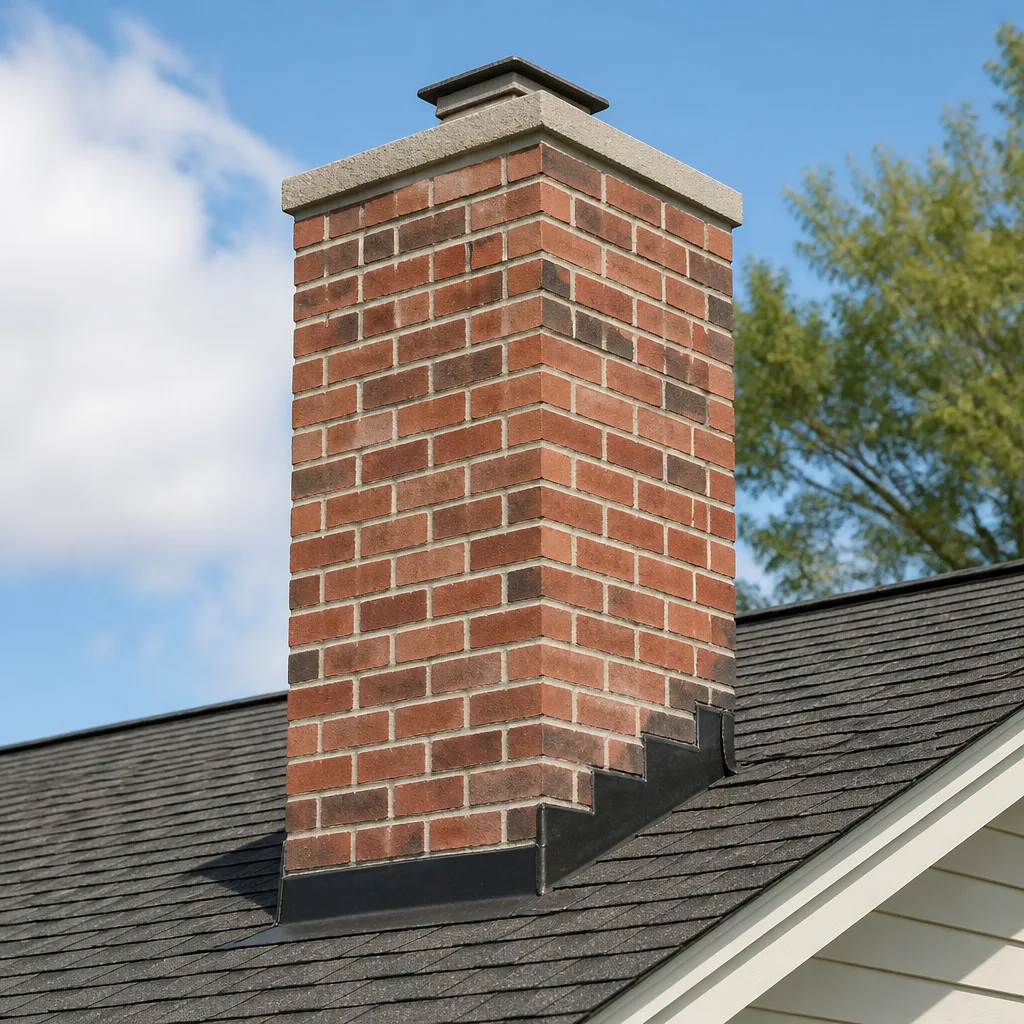 Masonry repair
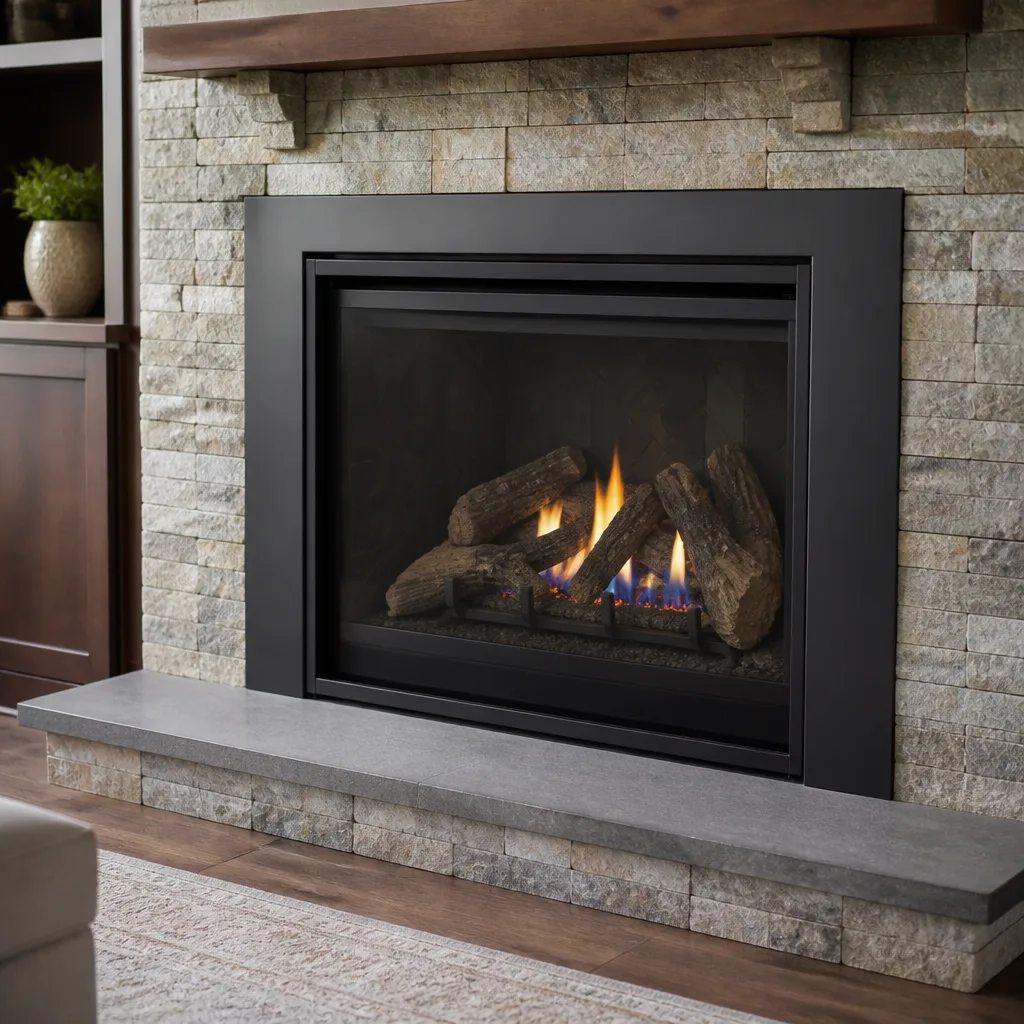 Gas fireplace service
Level 1 sweep and inspection to the NFPA 211 annual standard - flue, crown, cap, and flashing checked and photographed
Chimney sweep logs do not sweep chimneys. They loosen some creosote - which then falls where a brush and vacuum still have to collect it.
Seasonal Chimney Cleaning Care for Elmhurst: Year-Round Homeowner’s Guide
Most homeowners in Elmhurst schedule their chimney sweep in October. By then, it’s already late. The moisture damage from a humid Queens summer has set into the masonry, the birds and squirrels that nest in open flues have finished their season, and the first cold snap has arrived with a flue that hasn’t been looked at in twelve months. Chimney care here isn’t a fall chore; it’s a four-season routine shaped by freeze-thaw winters, sticky summers, and the particular ways an Elmhurst house ages. This guide walks you through what each season actually asks of your chimney, when to book work so you’re ahead of the weather instead of behind it, and what you can reasonably check yourself between professional visits.
Quick Answer
The best time to book a chimney sweep in Elmhurst is late summer, ideally August, before heating season begins, after nesting season ends, and before fall demand fills the schedule. The rest of the year is about protecting the chimney from the local climate: checking mortar and flashing after the winter freeze-thaw cycle in spring, managing moisture and biological growth in summer, and inspecting the cap and damper in fall before the first fire. A professional inspection once a year, timed to your usage, catches what visual checks cannot.
Styles & brands we work with
- Sweep & inspection
- Caps & crowns
- Flue relining
- Masonry repair
- Gas fireplace service
Table of Contents
- Why August Is the Best Month for a Chimney Sweep in Elmhurst
- Spring: What the New York Winter Left Behind
- Summer in Elmhurst: Moisture, Corrosion, and Nesting
- Fall Preparation: Beyond the Sweep Itself
- Winter Mid-Season Checks While the Fire Is Running
- What a Professional Inspection Actually Covers
- Signs Your Chimney Needs Attention Right Now
- Common Mistakes to Avoid
Why August Is the Best Month for a Chimney Sweep in Elmhurst
Most chimney companies get slammed from late September through November. That’s when homeowners light the first fire, smell something off, and call. Booking in August means you avoid that crush, get more attention from the technician, and start the heating season with a clean, inspected flue. It also means the work happens after nesting season has ended. Chimney swifts, starlings, and squirrels use open flues as nesting sites through spring and early summer in this part of Queens; sweeping before they’ve finished means you’re clearing a nest that’s still in use, which is neither legal for protected species nor effective. August sits in the sweet spot.
There’s a structural reason too. The moisture that accumulates in a flue during Elmhurst’s humid summers takes weeks to dry out fully once it gets into masonry. If you sweep in October, you may be looking at a flue that’s still holding moisture from August rain, and any repair work recommended then can’t be done properly until it dries. Sweeping in August gives you a clear picture of the flue’s condition before the wet season sets in and enough lead time to schedule repair work before cold weather.
If you’ve been putting off a visit, our chimney sweep is the service most homeowners start with, and it includes a visual inspection that flags anything the sweep turns up.
- Book in early-to-mid August to be on the schedule before the fall rush.
- Have the technician check for nesting debris as part of the sweep, since summer is when birds and squirrels move into open flues.
- Ask for a visual inspection of the crown, cap, and flashing at the same appointment.
- Note any repair recommendations so you can schedule them before the first freeze.
- Test your smoke and carbon monoxide detectors in the same week, ideally with fresh batteries.
Spring: What the New York Winter Left Behind
Spring in Elmhurst is when the damage from winter becomes visible. Repeated freeze-thaw cycles are the biggest stressor on masonry chimneys here. Water gets into small cracks in the mortar, freezes overnight, expands, then thaws during the day and the cycle repeats. Over a winter, hairline cracks become real ones, and mortar joints that looked fine in November can be crumbling by March. The first warm stretch of spring is the right moment to walk around the chimney at ground level with binoculars and look at the mortar joints, the crown, and the flashing where the chimney meets the roof.
Spring is also when you clear what built up over winter. Snow and ice can dislodge debris from the cap, squirrels may have moved into an unused flue looking for warmth, and birds start scouting nesting sites as early as March. If you didn’t have the flue swept in August or fall, spring is your make-up visit before the nesting season gets serious.
What to check in spring:
- Mortar joints: Look for crumbling, missing, or sandy mortar between bricks, especially near the top of the stack where freeze-thaw hits hardest.
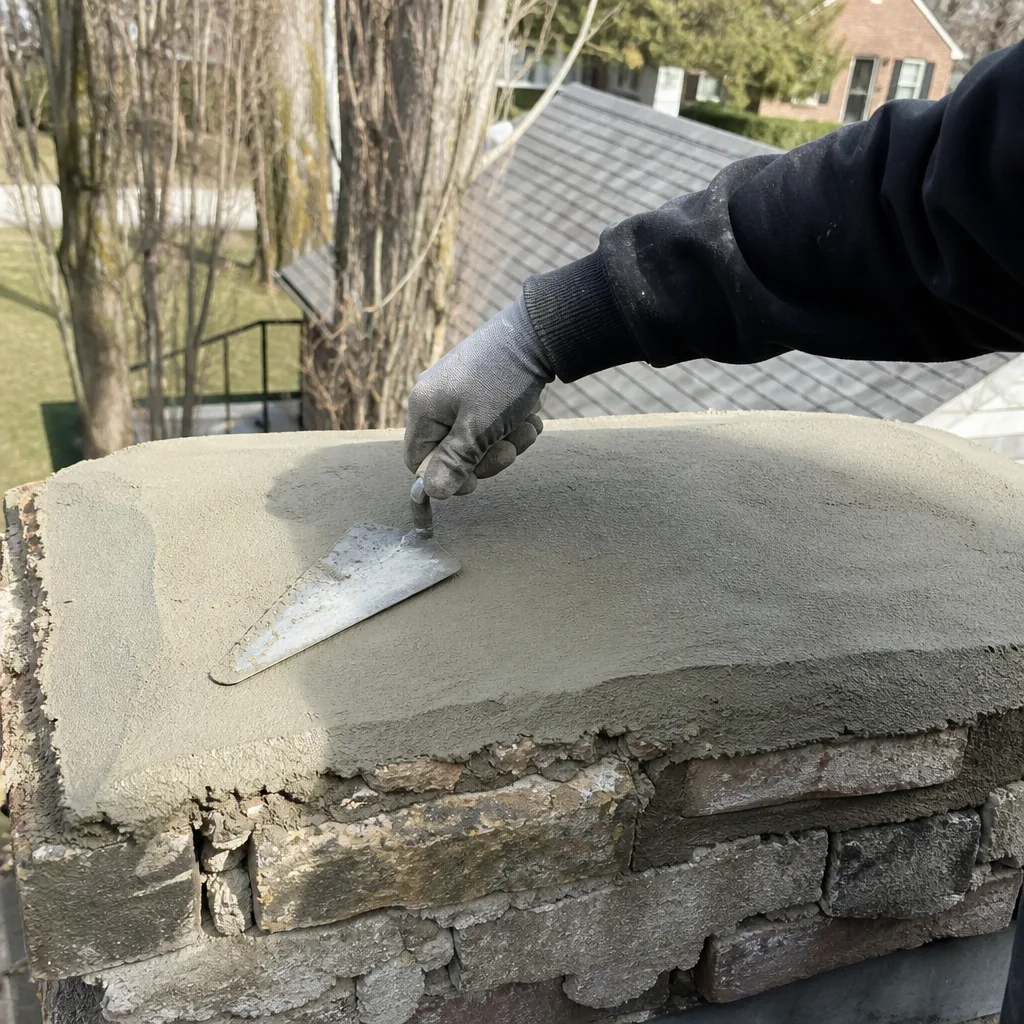
- The crown: The concrete cap at the top of the chimney should be crack-free with a slight slope away from the flue. A cracked or flat crown directs water straight into the masonry.
- Flashing: The metal where the chimney meets the roof should be tight and sealed. Gaps invite water straight into the attic.
- The damper: Open and close it by hand. It should move freely; if it’s stuck or won’t seal, that’s a repair.
- The firebox: Look for cracks in the firebrick or gaps in the mortar. Firebox damage is one of the reasons we also offer chimney repair alongside fireplace service.
Summer in Elmhurst: Moisture, Corrosion, and Nesting
Summer is the season most homeowners ignore their chimney. That’s exactly when it does the most quiet damage. Elmhurst’s summers are humid, and a masonry chimney absorbs moisture from the air the same way it absorbs rain. That moisture sits against the flue liner, and over years it corrodes metal liners and spalls brick from the inside out. On older homes with clay tile liners, water absorption into the tile and surrounding mortar opens cracks that widen with every freeze-thaw cycle the following winter.
A waterproofing application is the practical answer. It’s a breathable coating applied to the exterior masonry that keeps liquid water out while letting moisture vapor escape from the inside. It doesn’t fix existing damage; it prevents further water intrusion once cracks are repaired. That distinction matters. If a technician recommends waterproofing on a chimney with active cracks and no repair first, the coating will trap water inside.
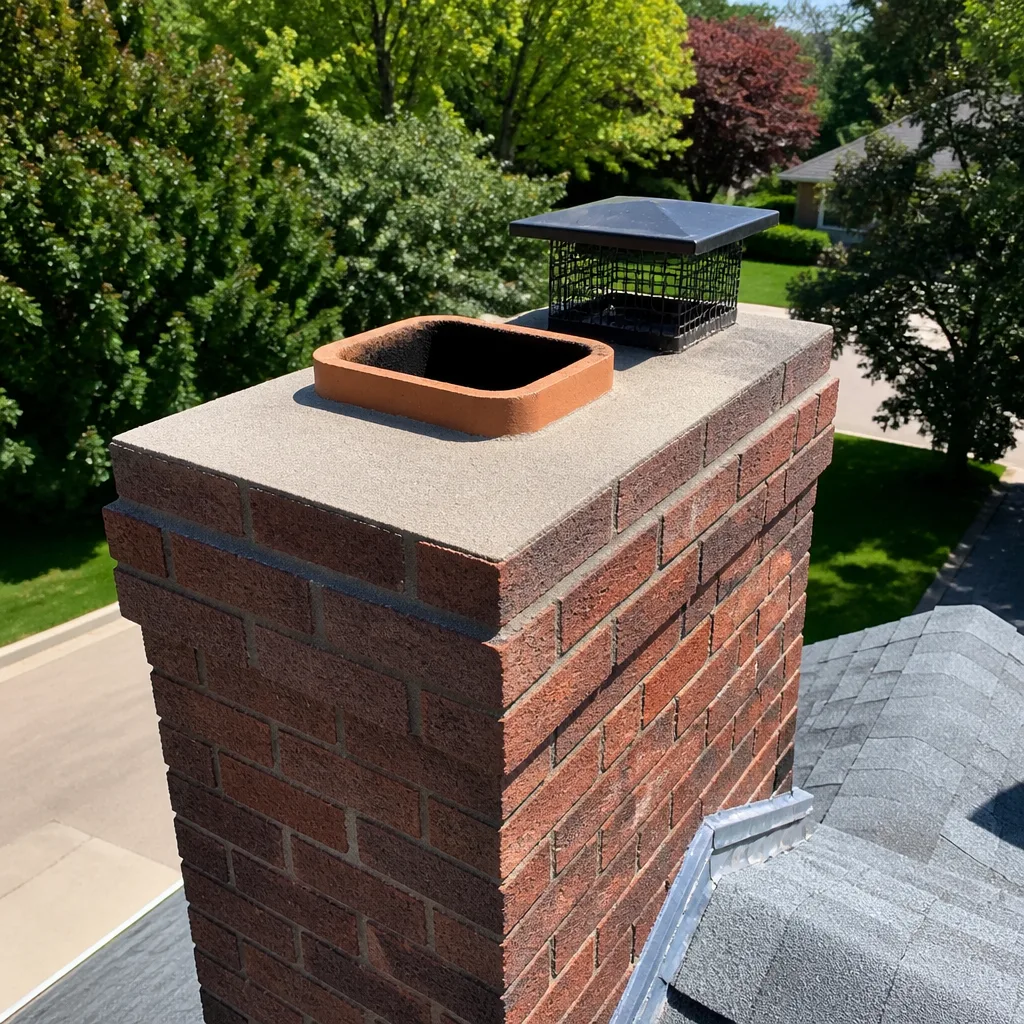
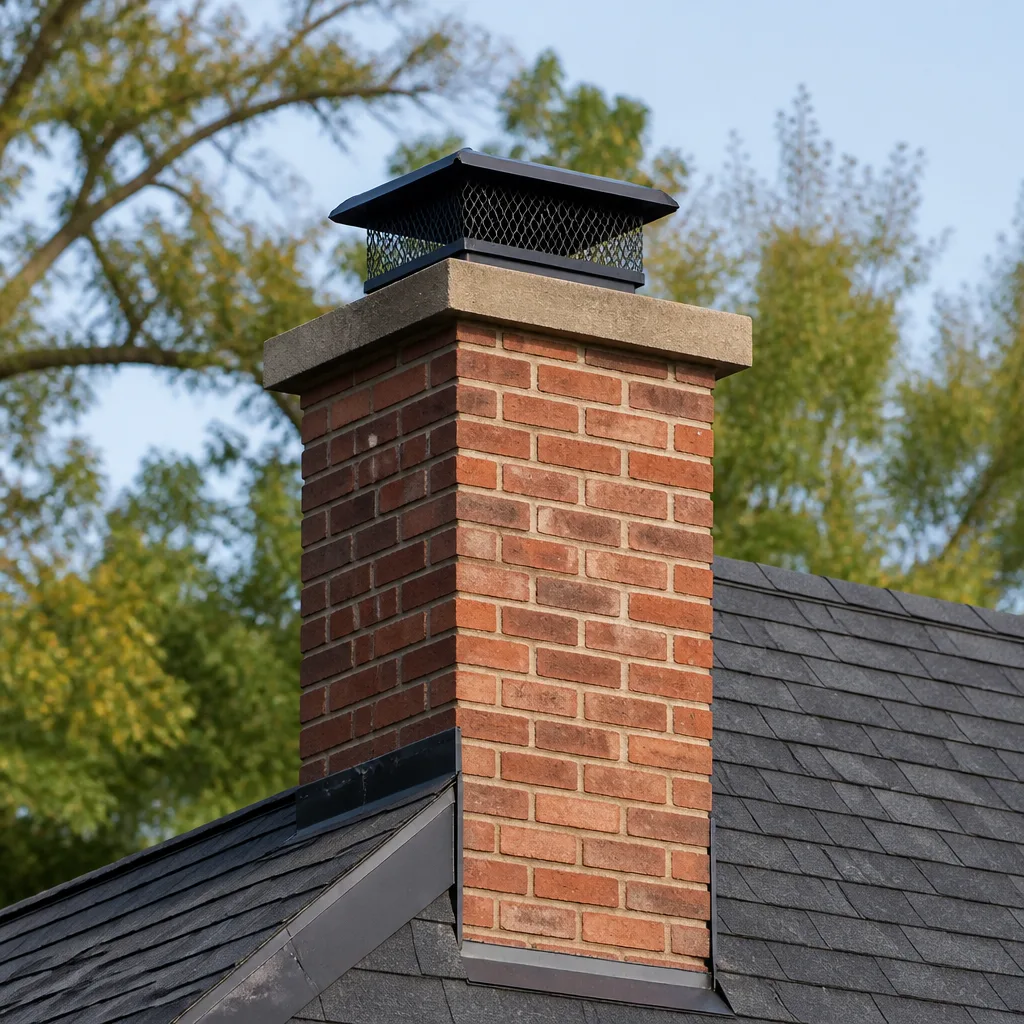
Summer is also nesting season. Birds, squirrels, and raccoons look at an open flue as an ideal den. An uncapped chimney in Elmhurst in July is essentially an invitation. A properly fitted chimney cap & crown solves this permanently. We fit caps from brands like Olympia Chimney and Gelco, which are built specifically for chimney applications rather than adapted from generic sheet metal. Between June and August, this is the single most useful upgrade a homeowner can make.
Fall Preparation: Beyond the Sweep Itself
The fall checklist most homeowners follow stops at “call the sweep.” That’s the first step, not the whole job. Before the first fire, several things need to be tested and confirmed, and none of them take long.
Damper testing. Open and close it completely. It should swing freely, seat firmly, and stay in position. A damper that’s stuck open means heat loss and drafts when you’re not burning. One that’s stuck closed means smoke comes into the room when you light a fire.
Cap inspection. Look at the cap from ground level. The mesh should be intact, the top should be sealed to the flue, and nothing should be sitting on top. A cap that’s tilted or missing screws will come off in the first fall windstorm.
Crown inspection. Same drill: cracks, gaps, or a flat top indicate the crown needs rebuilding. Crown work is part of what we do with cap and crown installations, and it’s worth scheduling before the first freeze because pouring a new crown in cold weather isn’t reliable.
Carbon monoxide detector placement. This is the piece most homeowners get wrong. The U.S. Consumer Product Safety Commission recommends at least one CO alarm on every level of the home and outside each sleeping area. Check that each unit is functional, that batteries are fresh, and that no detector is more than a few years past its replacement date on the back label. Detectors have a finite sensor life even when they beep. A working CO alarm is a non-negotiable piece of your heating setup.
Firewood storage. Keep firewood outside and away from the house. Stored wood indoors invites pests and holds moisture that you’ll then burn.
Winter Mid-Season Checks While the Fire Is Running
Once you’re burning regularly, watch for signs that something’s changing between annual services. You’re not doing a technical inspection; you’re noticing. When something looks off, it warrants a call.
- Smoke entering the room when you light up. A little on a cold start is normal. Smoke on every fire, or after the flue has warmed, means the draft has changed.
- Reduced draft or a fire that won’t get going. Often means a partial blockage or a damper issue.
- New odors in the room when the fire isn’t running. Creosote smell when the house is warm suggests buildup that needs sweeping. A musty smell suggests moisture.
- Visible creosote buildup on the flue walls. If you can shine a light up the flue from the firebox and see shiny, tar-like glazing, that’s stage-three creosote, which is a fire risk and needs professional removal.
- Crumbling brick or mortar visible in the firebox. Firebrick separates the fire from the structure. Cracks need fixing before the next fire.
- The CO detector has gone off. Leave the house, call the fire department, and don’t relight until a professional has inspected the flue.
If any of these turn up mid-winter, call us at (844) 871-3169. We answer 24/7, and a call outside dispatch hours is booked into the next opening, Sunday through Friday, 7am to 7pm. Fast dispatch from 7am to 7pm means most non-emergency concerns get addressed quickly.
What a Professional Inspection Actually Covers
A chimney inspection is where most seasonal care decisions get made, and it’s worth knowing what you’re paying for. At the most basic level, an inspection covers five things, in order, from the top of the stack down to the firebox.
- The cap and crown: Looking for cracks, missing screws, damaged mesh, or water intrusion at the top.
- The flue interior: A camera inspection down the flue to check for cracks, gaps between tile sections, creosote buildup, obstructions (nests, debris), or liner damage. Many homeowners never see this footage until something goes wrong; seeing it yourself is the single best way to understand what a technician is recommending and why.
- The smoke chamber and damper: Looking for cracks, gaps, and proper damper operation.
- The firebox: Checking firebrick and mortar for cracks and heat damage.
- The exterior: Brick, mortar, flashing, and siding where the chimney meets the roof.
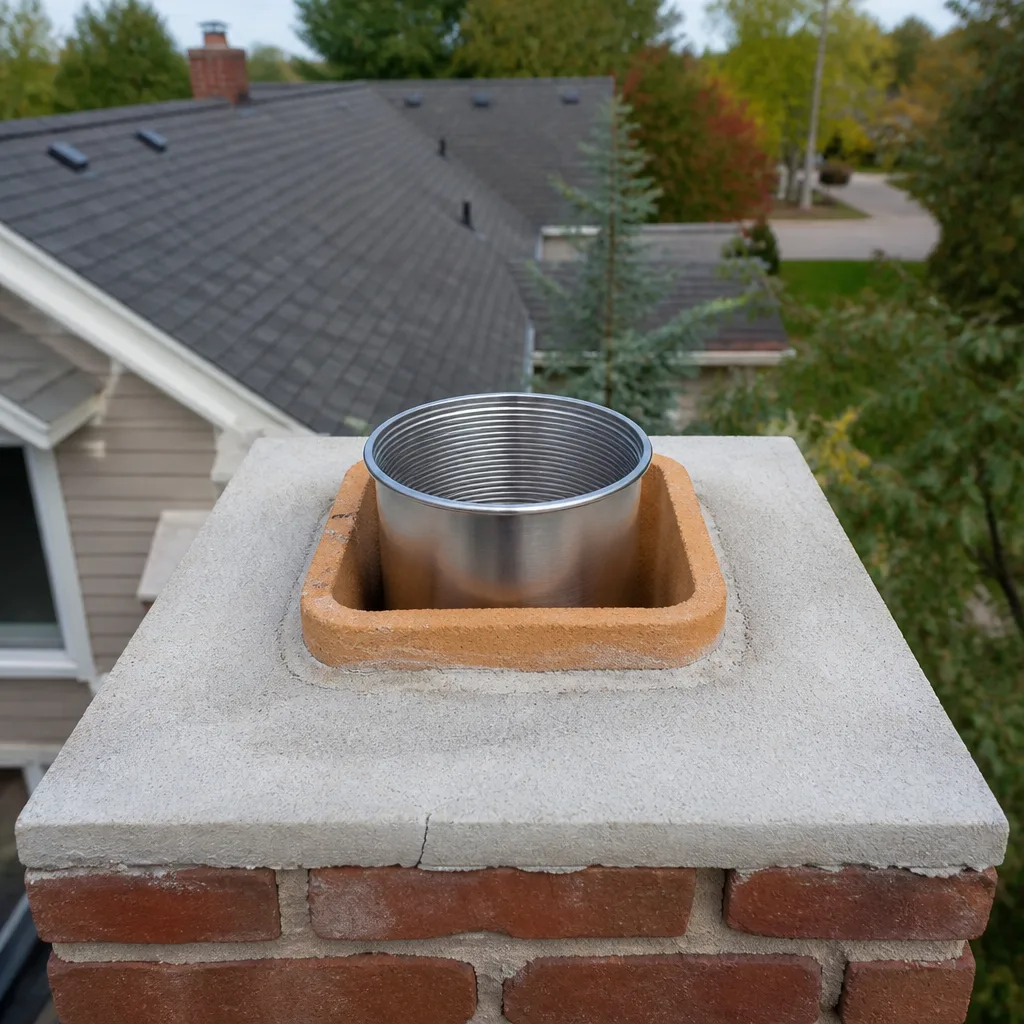
From the crown down to the firebox, we handle all of it. When we perform an inspection, we tell you what your chimney actually needs, nothing more, nothing less. If the flue is sound, you’ll hear that. If a liner is cracked only near the top and a spot repair with a HeatShield ceramic resurfacing makes more sense than a full reline, we’ll explain the options. HeatShield is a restoration-tier capability most sweep-only companies don’t have. A full reline with a DuraFlex liner is the right call when the existing flue is too compromised to restore safely, and we offer that too. We don’t recommend work you don’t need, and we don’t tell you a liner needs replacing without showing you the footage that says so.
Signs Your Chimney Needs Attention Right Now
Most chimney problems develop slowly. A few signals mean you should stop burning and get an inspection before the next fire. None of these require panic; they require a call and a professional set of eyes.
- Strong, persistent odors from the fireplace when you haven’t burned recently. Often creosote or moisture buildup.
- Any sign of smoke coming back into the room. Draft changes usually indicate a blockage or a liner issue.
- Water stains on the ceiling near the chimney or on the chimney breast itself. That’s a flashing, crown, or cap problem letting water in.
- Visible cracks in the firebox brick or masonry. Stop burning until inspected; firebox damage can let heat reach the framing.
- Pieces of mortar or brick on the roof or ground below the chimney. Masonry is failing; get it looked at before the next storm.
- Animals in the flue. A scratching or chirping sound when the fireplace is quiet means something is living up there. Don’t burn; call.
- Your CO alarm has gone off. Leave the house and call the fire department first, then a chimney professional.
Common Mistakes to Avoid
- Waiting until the first cold snap to book. October is the busiest month for every chimney company in Queens; scheduling in August means you skip the queue and get the flue sorted before it matters.
- Sweeping but never inspecting. A sweep clears creosote. An inspection reveals cracked liners, failing crowns, and moisture damage that a sweep cannot see. You need both.
- Capping with anything but a chimney-specific cap. Generic sheet metal caps fail in a few seasons. Caps from a maker like Famco or Olympia Chimney are built for the job and last.
- Skipping the firebox. The firebox is the fire’s direct container. Cracks in firebrick or mortar can let heat into the framing behind, which is exactly the kind of problem a chimney-specific inspector catches.
- Burning unseasoned wood through the winter. Damp firewood sends moisture up the flue, which combines with creosote to accelerate liner damage. Seasoned wood only.
- Assuming the CO detector is fine because it hasn’t beeped. CO detectors have a limited sensor life even when they don’t chirp. Check the replace-by date on the back of every unit each fall.
- Ignoring a chimney that’s never used. An unused flue still needs a capped top, a working damper, and a periodic look. Water intrusion and nesting happen whether or not you burn.
See the difference
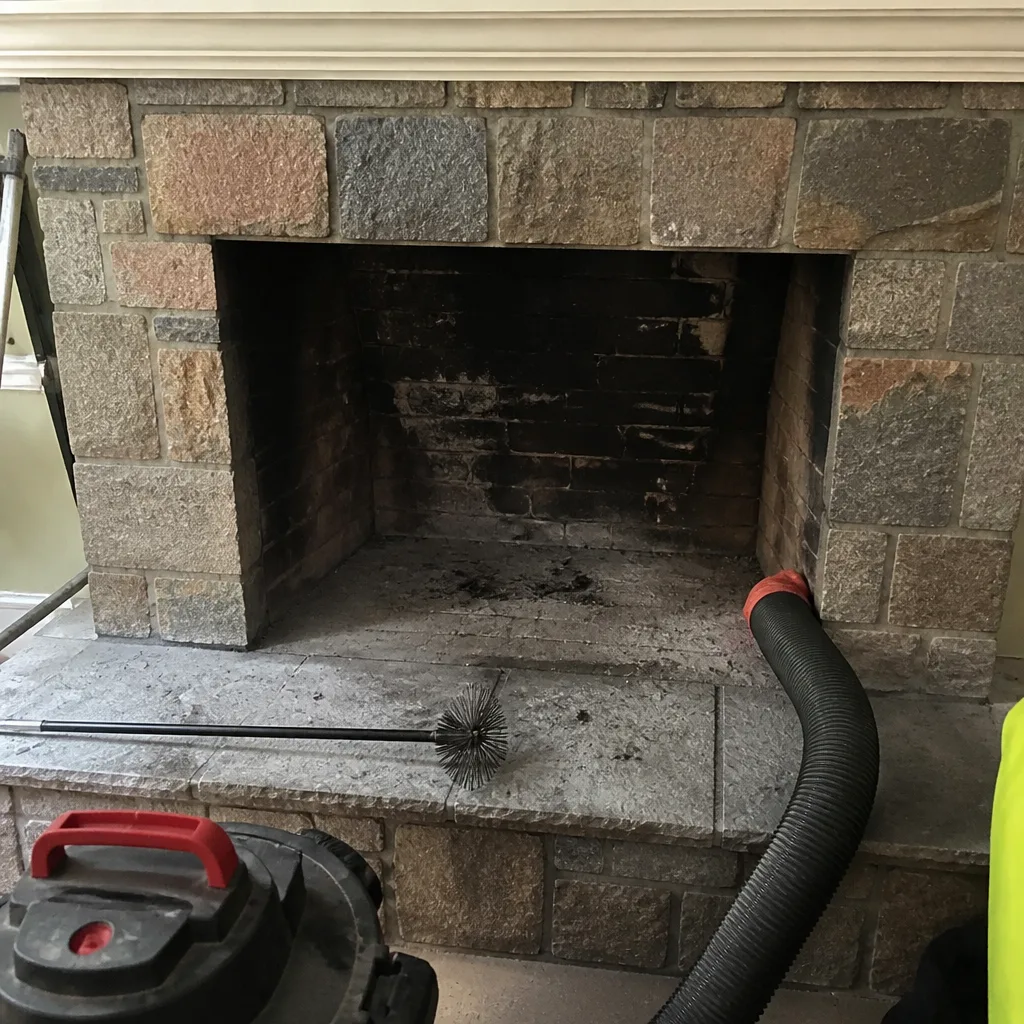 Before
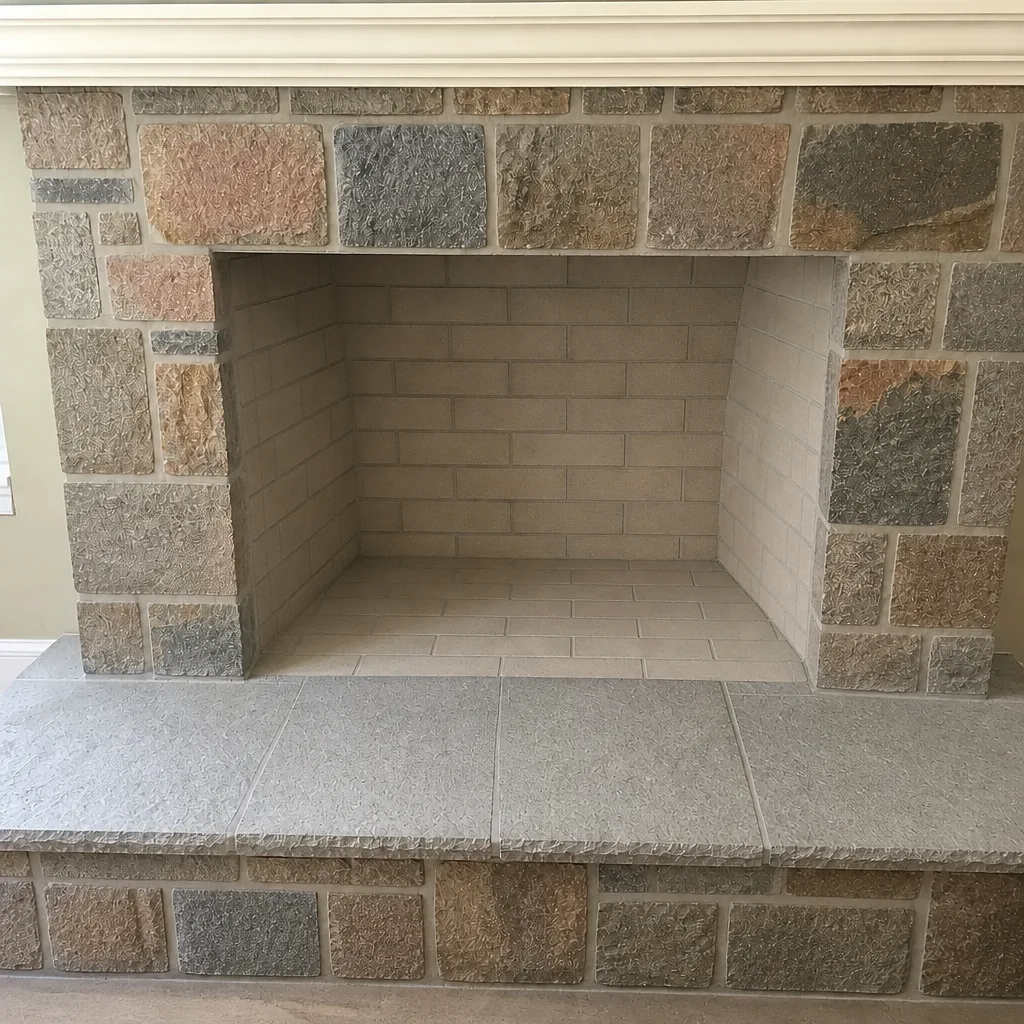 After
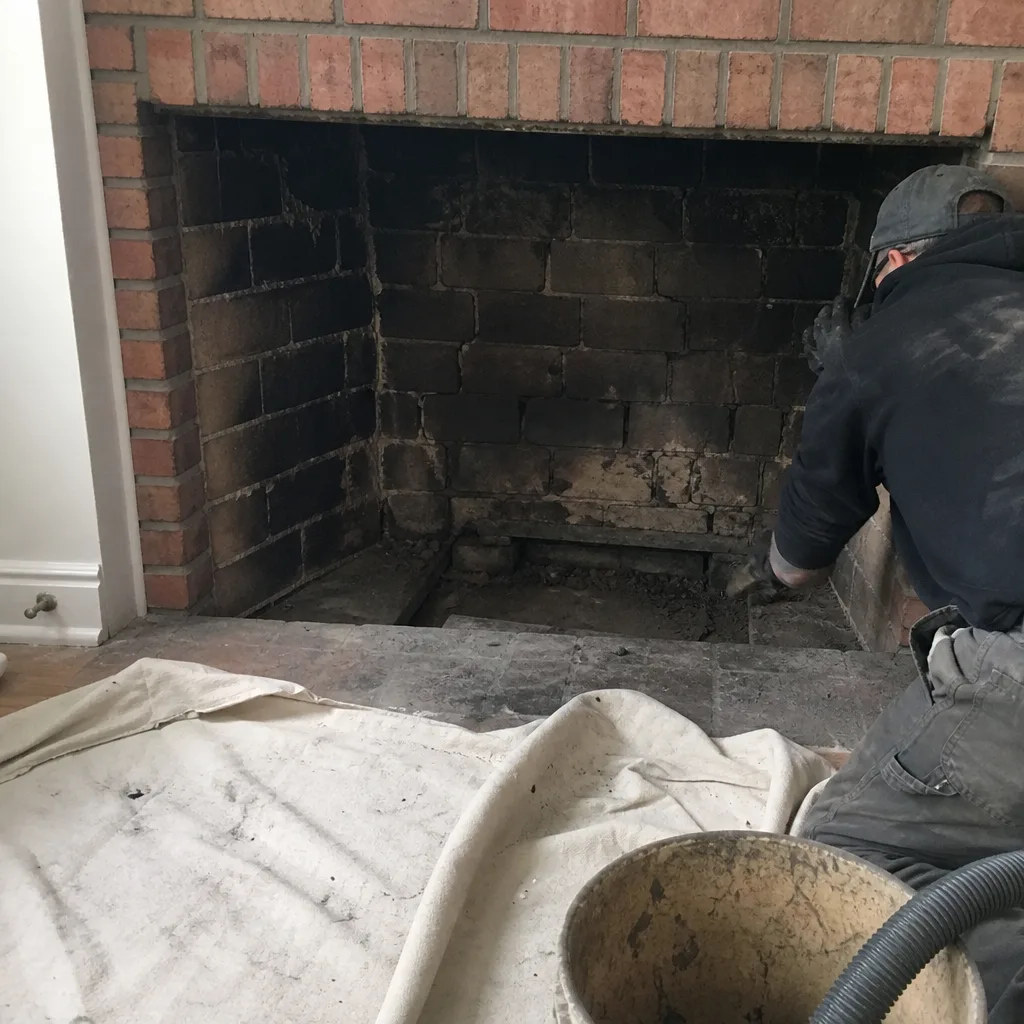 Before
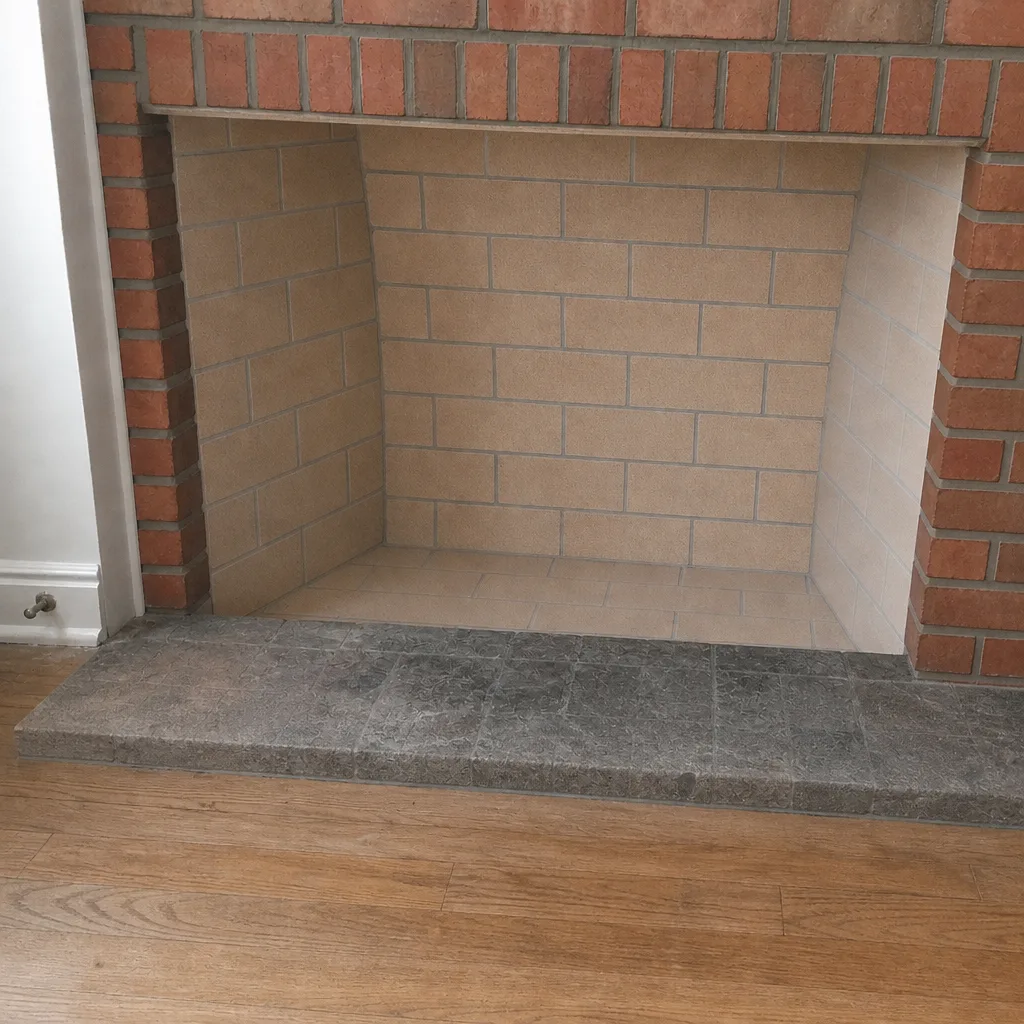 After
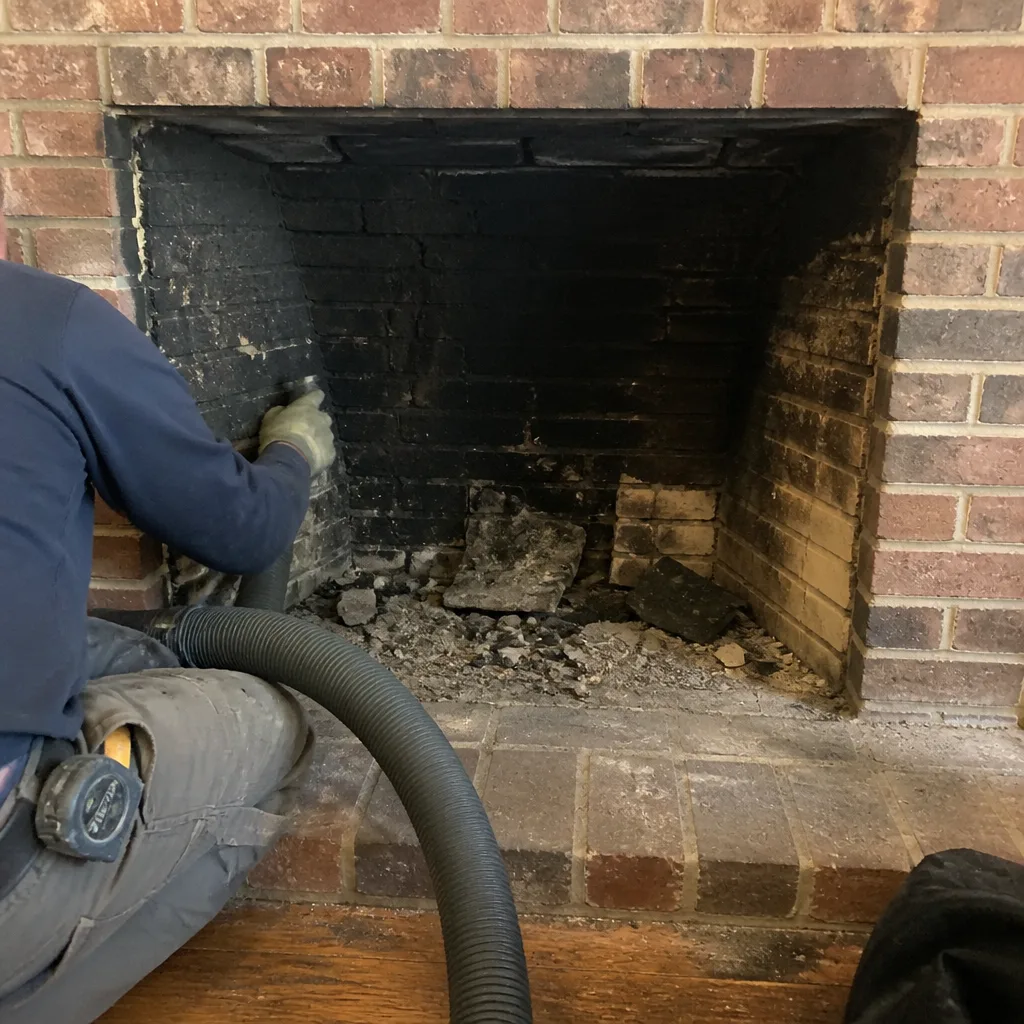 Before
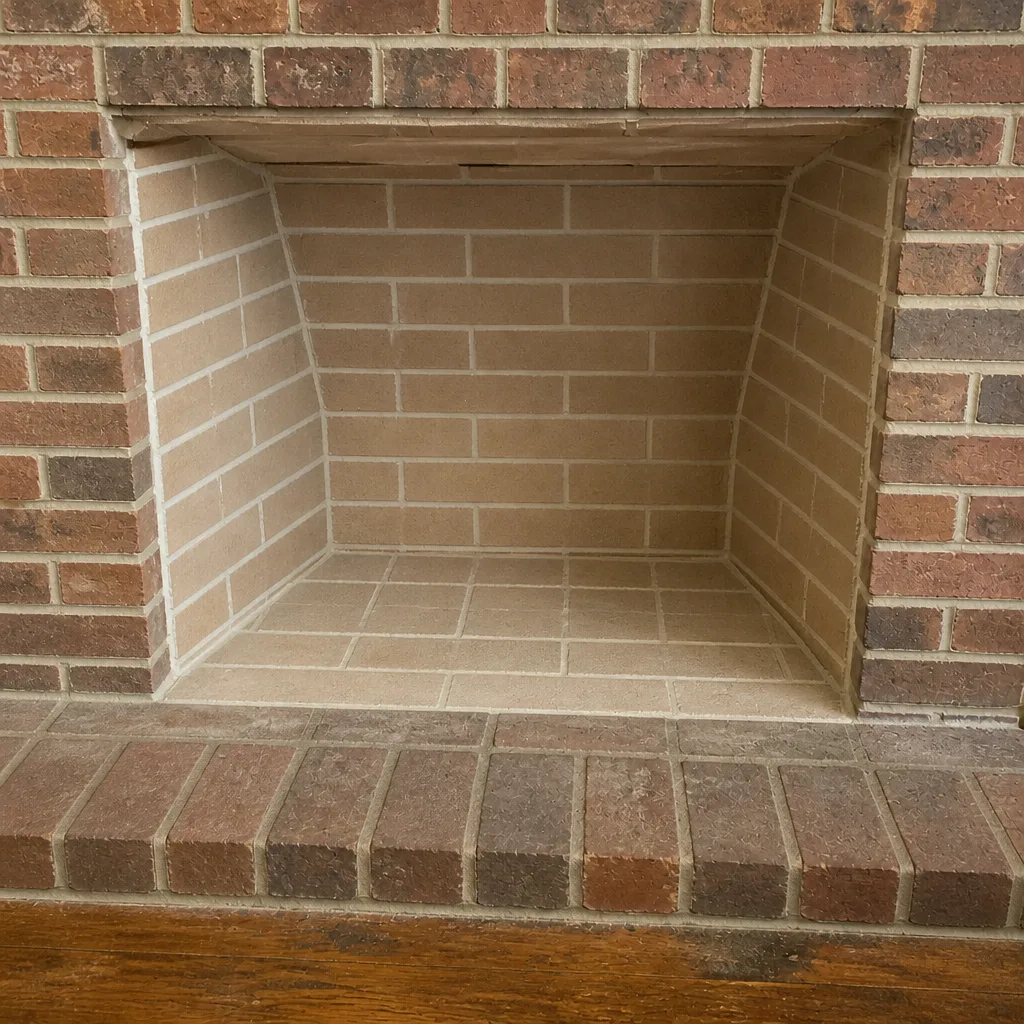 After
When to Call a Professional
Some work is scheduled; some is called in. Schedule a sweep and inspection if it’s been more than a year of regular use, if you’ve just moved into the house, or if the last inspection didn’t include camera footage of the flue interior. Call right away if smoke enters the room on every fire, if your CO detector has gone off, if you can see cracks in the firebox or masonry, if water is reaching the interior, if animals are in the flue, or if you smell creosote or musty odors when the fireplace is idle. Anything that points to a structural or combustion-gas problem should not wait for a convenient week in spring. Elmhurst Chimney Sweep offers free estimates in Elmhurst. Call (844) 871-3169. We answer 24/7.
Frequently Asked Questions
At least once a year if you burn regularly, and more often if you burn green wood or use the fireplace heavily through the winter. The National Fire Protection Association recommends annual chimney inspections, and the sweep is typically part of that visit or done alongside it. If you burn occasionally, an annual inspection still matters even if the sweep is less urgent, because liners, crowns, and caps degrade from weather regardless of use.
Late summer, ideally August, is when we recommend scheduling annual sweeps and inspections. It falls after nesting season, before the first heating season, and before the fall demand fills every provider’s schedule. Spring is the right time for masonry checks after the winter freeze-thaw cycle, and fall is for confirming damper, cap, and detector readiness before the first fire.
It’s usually the combination of masonry construction and the local freeze-thaw cycle. Water absorbed during humid summers or heavy rain expands when it freezes overnight in winter and opens cracks that widen each season. Older homes with insufficient flashing or a cracked crown can also funnel roof water directly into the chimney stack. A camera inspection plus a waterproofing application, after any cracks are repaired, is the standard response.
You can do a useful ground-level check: look at the crown, cap, and flashing with binoculars, test the damper by hand, and shine a light up the firebox to look for visible creosote or cracks. What you cannot do safely is a full flue inspection or a climb onto the roof. Ladders on pitched roofs, and climbing around a stack that may have failing mortar, are how homeowners get hurt. Have a professional do the roof and flue inspection; do your own visual checks between visits.
A skipped year is not automatically a crisis, but it means creosote builds up another layer, small cracks widen another season, and any nest or debris stays put through the summer. The most common outcome is a larger repair bill later, or a failed inspection at a home sale. If you’re skipping a year because the chimney has never given you trouble, at minimum get the cap and crown looked at and confirm the CO detectors are working.
It depends on the extent of the damage, and the inspection footage answers the question. Small cracks and surface deterioration can sometimes be addressed with a HeatShield ceramic resurfacing, which restores the flue interior without a full tear-out. Extensive cracking, separated tiles, or a flue that’s structurally compromised calls for a full reline, and the DuraFlex liner system is the standard choice for that. Either way, ask to see the inspection footage before agreeing to the repair.
Install working CO detectors on every level of the home and outside each sleeping area, check batteries each fall, and replace units per their listed sensor life (often five to seven years; check the label). Make sure the damper opens fully before you light, and never burn with the damper closed. If a CO detector goes off, leave the house and call the fire department; don’t try to “air it out” first.
The Bottom Line
Chimney care in Elmhurst isn’t a fall event; it’s a year-round routine timed to the local climate. Book your sweep and inspection in August, before the fall rush and after nesting season. Check masonry, mortar, and flashing in spring after the winter freeze-thaw. Manage moisture and consider a cap in summer. Test your damper, cap, and CO detectors in fall. Watch the fire through winter for draft changes, smoke, or smells that suggest something’s shifted. And at every step, insist on an inspection with camera footage so you can see what the technician is recommending and why. From the crown down to the firebox, one specialist for the full system means one visit covers inspection, cleaning, and any repair. Call (844) 871-3169 for a free estimate. We answer 24/7, with fast dispatch from 7am to 7pm, Sunday through Friday, closed Saturday. Elmhurst Chimney Sweep offers the full service – Elmhurst Chimney Sweep.
Written by the team at Elmhurst Chimney Sweep.